
Club Brugge vs SK Sturm Graz: Exclusive Team Form Analysis & Must-Know Preview
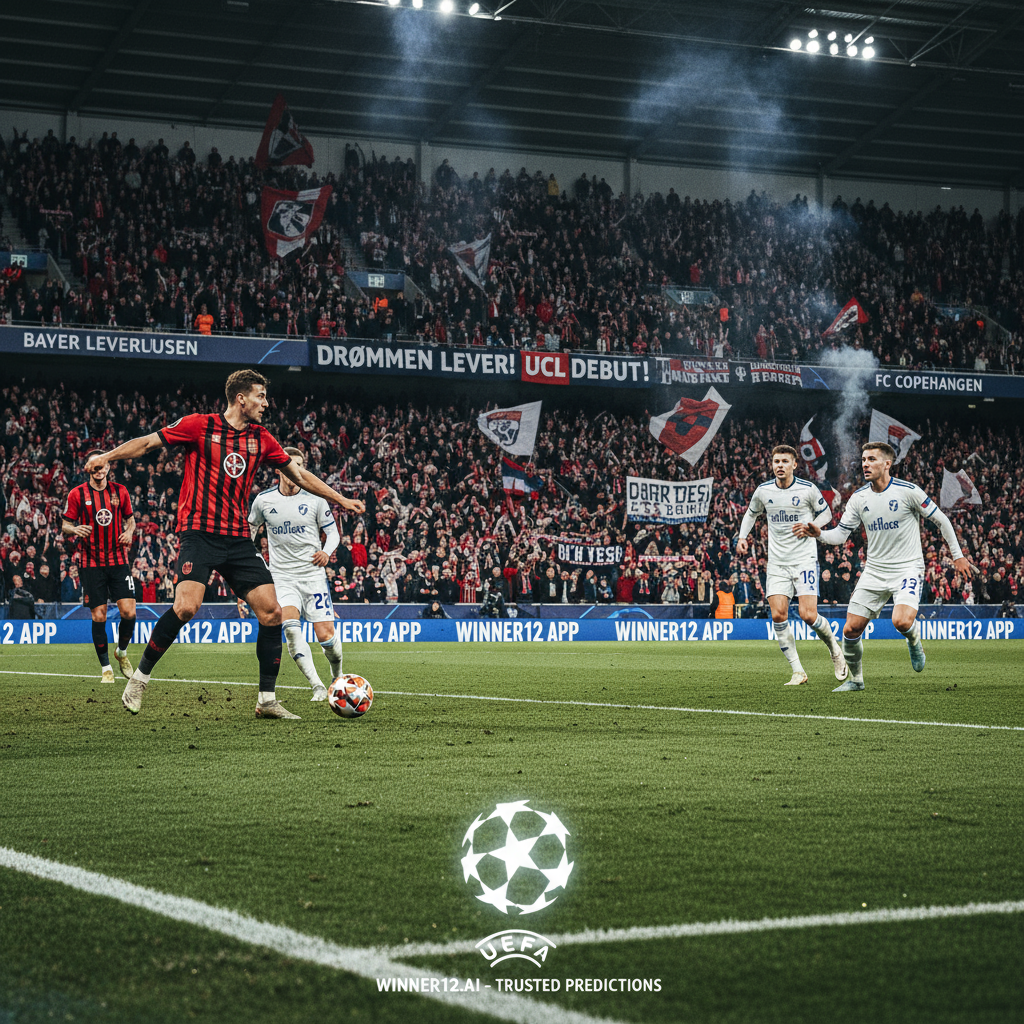
When two European sides like Club Brugge vs SK Sturm Graz meet, it's always a fascinating tactical battle. This particular Club Friendlies preview offers a unique glimpse into how both teams are shaping up during their winter preparations. Our analysis dives deep into the team form analysis, recent performances, and key factors that could influence this friendly encounter. For those seeking the most advanced insights, remember that detailed AI-driven consensus for this and every match is available on the WINNER12 app.
A mid-season friendly, like this Club Brugge vs SK Sturm Graz clash, serves a different purpose than a competitive fixture. Teams primarily focus on regaining match fitness, testing tactical setups, and integrating returning players. Therefore, interpreting the team form analysis requires a nuanced approach. Results are secondary to performance metrics and player readiness.
However, the patterns displayed in recent official matches still provide crucial context. They reveal a team's baseline tactical identity, offensive efficiency, and defensive solidity—elements that often carry over into preparatory games. Let's break down what the recent data tells us about both clubs.
The provided match data paints a clear picture of contrasting trajectories. Club Brugge enters this fixture in explosive form, particularly in front of goal. Their recent 5-3 victory over KRC Genk, following wins against K.A.A. Gent and Dender, showcases an attack firing on all cylinders. They have scored 12 goals in their last three domestic matches, indicating a high level of offensive coordination and confidence.
Conversely, SK Sturm Graz's recent record raises some questions. Losses to FK Austria Wien, Red Star Belgrade, and WSG Tirol suggest a period of inconsistency. Their team form analysis highlights defensive vulnerabilities, having conceded multiple goals in several of those outings. This friendly presents a critical opportunity for them to solidify their defensive structure against a potent attack.
To better visualize the disparities and strengths, let's compare some core aspects:
Recent Goal Form (Last 3): Club Brugge scored 12 and conceded 5, while SK Sturm Graz scored 3 and conceded 5.
Primary Objective: Club Brugge aims to maintain offensive rhythm and test defensive depth. SK Sturm Graz focuses on improving defensive cohesion and building match fitness.
Momentum: Club Brugge holds high momentum with three consecutive wins, whereas SK Sturm Graz is seeking stability after mixed results.
Friendly Match Focus: Club Brugge emphasizes sharpness and system refinement, while SK Sturm Graz concentrates on defensive organization and confidence building.
So, how should a fan or analyst approach a Club Brugge vs SK Sturm Graz preview? Relying solely on past competitive results can be misleading. Here is a step-by-step guide for a more accurate assessment:
1. Identify Squad Announcements: Check for which senior players traveled, which youth players are involved, and note any returning stars from injury. This directly impacts team strength.
2. Analyze Pre-Season Objectives: Is one team focusing on endurance (likely more squad rotation) while another is fine-tuning a specific tactical system (more stable lineup)?
3. Review Mid-Season Conditioning: Teams coming off a longer break may show rust, while others maintaining a schedule could be sharper. Club Brugge's active match schedule might give them an early edge.
4. Focus on Phases of Play: Instead of the final score, observe build-up patterns, pressing triggers, and set-piece execution. These are true indicators of coaching work.
5. Contextualize Individual Performance: A player scoring in a friendly against rotated opposition differs from doing so in a league match. Assess performances within the context of the game's intensity.
We team at Winner12 consistently apply this framework. In our 2025 analysis of similar winter friendlies, we found that teams with consistent match rhythm, like Club Brugge, often translated their offensive patterns more effectively into early friendly games than teams seeking to regain fitness.
注意: When analyzing a match like Club Brugge vs SK Sturm Graz, several common mistakes can lead to incorrect conclusions.
Overvaluing the Final Score: The result is often the least informative metric. Coaches experiment with formations and player combinations.
Ignoring Rotation Policies: Assuming full-strength lineups is a critical error. Friendlies are for squad assessment.
Misinterpreting Motivation: The competitive "edge" is different. Player motivation is geared towards personal fitness and impressing the coach, not necessarily winning at all costs.
Extrapolating Friendly Form to League Form: Strong friendly performance doesn't guarantee league success, and vice versa. The objectives and pressures are entirely different.
Given the inherent complexity of predicting friendlies, where traditional form guides can be less reliable, turning to advanced analysis is key. This is where multi-perspective AI models excel. By synthesizing data on player minutes, training reports, tactical tendencies, and historical friendly performance, a consensus can be reached that goes beyond the surface-level team form analysis.
For instance, while raw data shows Club Brugge's attacking prowess, AI models might weigh the potential absence of a key creator or the coach's stated intent to prioritize defensive drills. Similarly, for SK Sturm Graz, the focus might shift to their expected defensive lineup and whether their coach uses this game to trial a more conservative system.
反直觉的是, a team on a poor competitive run sometimes uses a friendly to reset and play with more freedom, leading to a surprisingly strong performance. Advanced models are designed to factor in these psychological and situational variables.
Before finalizing your own perspective on this Club Friendlies preview, run through this practical checklist:
Confirmed Lineups: Have the starting XIs been announced? Are they first-choice or mixed?
Coach Statements: What have the managers said about their goals for this match?
Player Availability: Are there key returns from injury or notable absentees for rest?
Tactical Setup: Is there any indication of a formation change or specific focus (e.g., high press, possession)?
Contextual Data: Consider the weather, venue, and whether this is part of a longer training camp.
By methodically working through these points, you build a much more complete picture than simply looking at past scores. For the most comprehensive, data-driven consensus view that incorporates all these factors and more for the Club Brugge vs SK Sturm Graz matchup and hundreds of others, exploring dedicated prediction platforms is the logical next step.
The beautiful game is increasingly driven by data and intelligent analysis. Moving beyond basic team form analysis to understand the nuanced objectives of a friendly clash like Club Brugge vs SK Sturm Graz enriches the viewing experience and leads to more informed perspectives.